
Outdoor Baseball Gear Storage to Keep Sports Equipment Safe
TL;DR: Baseball gear has a way of taking over the house fast. A dedicated storage zone, whether a garage corner, mudroom wall, or weather-resistant outdoor cabinet, solves most of the chaos. Keep frequently used items accessible, store gloves off damp surfaces, go vertical with bats, and give helmets their own shelf. At season's end, clean and condition gear before packing it away to avoid cracked leather and musty surprises come spring.
If you've got a baseball player in the house, you already know how fast the gear takes over.
Bats in the corner, helmets on the floor, gloves tossed on the shelf next to the car keys. Before long, storing equipment becomes its own project. A little organization goes a long way, though, and it doesn't have to be a super big deal.
Here are some practical baseball storage ideas to keep everything in great shape and easy to grab on game day.
1. Start with a Dedicated Spot for Baseball Equipment Storage
The biggest mistake most families make is not having a really specific home for their baseball gear. When there's no set place, stuff ends up scattered everywhere.
So, pick one spot, a section of the garage, a corner of the patio or a mudroom wall, and make it the official baseball zone. Once your player knows exactly where everything goes, getting organized (and staying that way) gets so much easier.
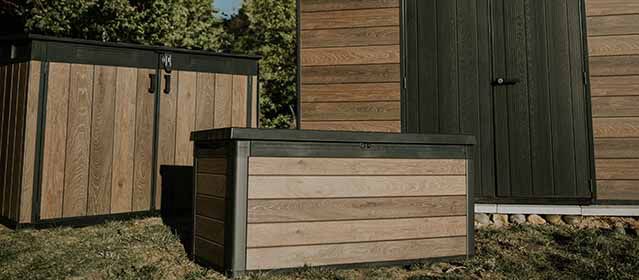
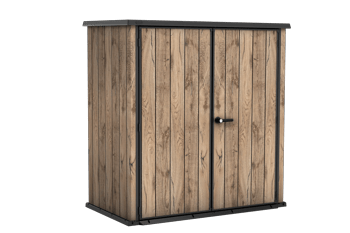
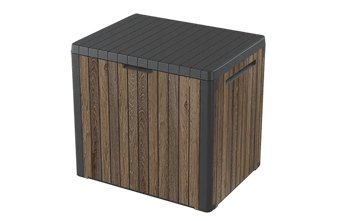
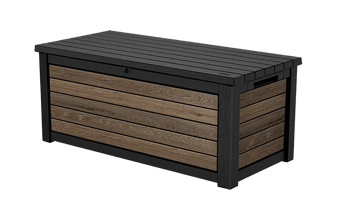
A sturdy outdoor storage cabinet or deck box works really well here. You can tuck bats, helmets, batting gloves and even bags inside and keep them protected from sun, rain and humidity. Keter's weather-resistant outdoor storage options are built to hold up in all kinds of conditions, so your gear stays dry and ready to go.
2. Store Sports Equipment by How Often You Use It
Not everything in the baseball bag needs to be equally easy to get to. Helmets and batting gloves get grabbed every single practice. A backup pair of cleats or the catcher's chest protector? Maybe not as much.
Think about what your player reaches for constantly and keep that stuff front and center. Things used less often can go deeper into a cabinet or higher up on a shelf. This one small shift makes your whole storage of sports equipment setup feel more functional and less like a treasure hunt before every game.
3. Keep Gloves and Leather Gear Off the Ground
Gloves are one of the most expensive pieces of equipment in a baseball bag, and they're also one of the most sensitive to moisture. Leaving a glove on a concrete floor or stuffed at the bottom of a bin can warp the leather over time.
Give gloves their own hook or shelf space where air can circulate around them. If you're storing a glove for the off-season, stuff it with a ball to help it hold its shape. Keeping leather gear off damp surfaces is one of the easiest baseball equipment storage ideas you can put into practice right now.
.jpg?sw=1440)
.jpg?sw=20)
4. Use Vertical Space in a Shed and Horizontal for a Deck Box for Bat Storage
Bats are awkward to store because of their shape, and leaning them against a wall is a recipe for them rolling around and getting dinged up. Going vertical is the way to go if you’re storing items in a shed.
A shelf system in a storage shed lets you store bats securely so they're out of the way but still easy to grab. If you've got multiple bats (wood, aluminum, different sizes for different players), keeping them sorted vertically also makes it easy to find the right one fast. This is especially useful in a garage or shed where floor space is limited.
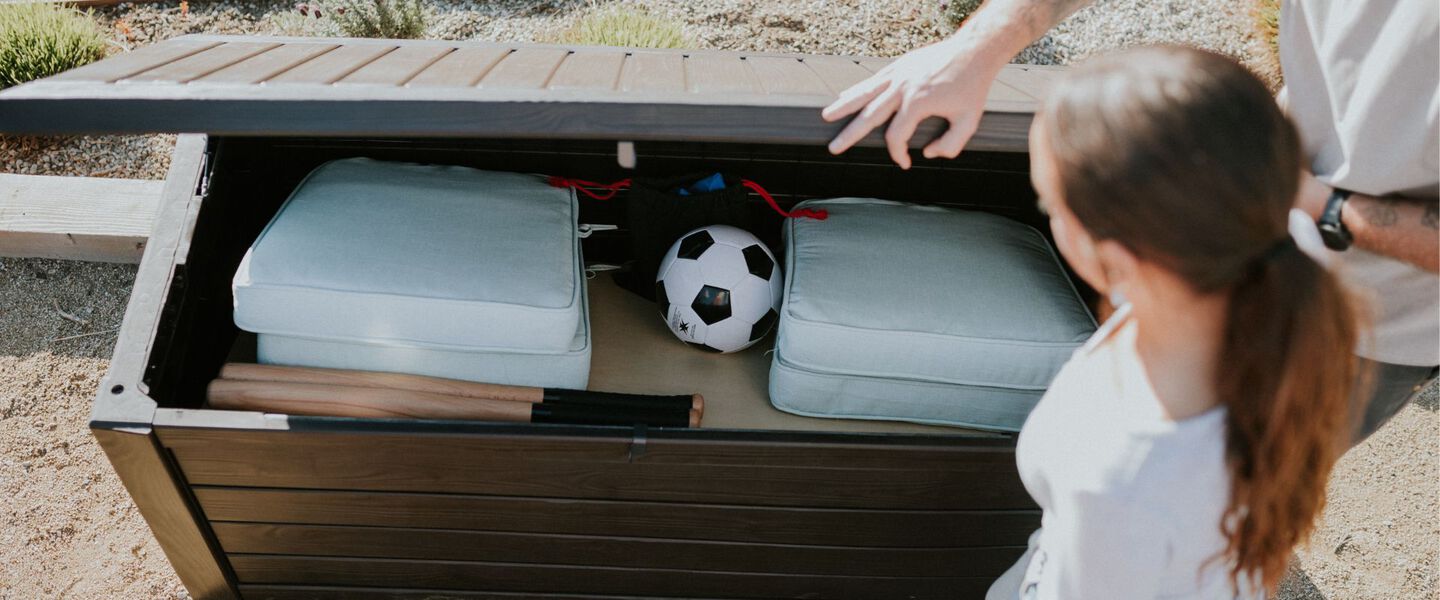
If you’d rather use horizontal storage, you could use a deck box to store bats on your deck or patio as well.
5. Don't Forget About Helmets
Helmets take a beating during the season, and they need a little more care than most people give them. Tossing a helmet into a bin with cleats and batting practice balls isn't doing it any favors.
A shelf or cubby at helmet height is ideal. You want helmets stored right-side up, not stacked or crushed under other gear. Check the inside padding periodically for moisture or odor; a mesh bag or a quick wipe-down before storing makes a big difference. This is especially true for organized sportswear that you want lasting multiple seasons.
6. Set Up a Gear Bag System That Actually Works
If your player heads to practice and games with a bag, that bag is basically mobile baseball storage. Help them get into the habit of repacking it the same way every single time. So, shoes in the outer pocket, batting gloves inside the helmet and sunflower seeds nowhere near the glove (trust us on this one).
Having a shelf where the bag lives when it's home keeps it from ending up on the kitchen counter. A dedicated landing spot for the bag is one of those small things that keep the whole house a lot more manageable during the season.

7. Think About Off-Season Baseball Storage
When the season wraps up, it's worth taking a little time to store things properly instead of just shoving everything into a bin and forgetting about it until spring.
Clean cleats before storing them. Let the batting gloves air out. Condition the leather glove with a little glove oil. Then pack everything into a weather-resistant bin or cabinet where it won't be exposed to temperature swings or dampness all winter. Taking 20 minutes at the end of the season saves you from dealing with cracked leather and musty gear when tryouts roll back around.
8. Add Labels So Everyone Knows Where Things Go
This tip sounds small, but it genuinely makes a difference. Label the shelves. Label the hooks. Label the bins. When your player (and the rest of the family) can see exactly where things belong, putting stuff away becomes the path of least resistance.
This works especially well if you have multiple kids playing different sports and you're storing equipment for more than one team. Clear labels keep baseball gear from getting mixed in with soccer cleats and volleyball knee pads.
The Payoff Is Totally Worth It
Getting your baseball equipment storage organized takes a little effort upfront, but it pays off all season long. No more scrambling for a helmet five minutes before you need to leave. No more wondering where the batting gloves went. Just a clean, functional setup that makes game days a little less hectic.
Pick one or two of these baseball storage ideas to start with and build from there. You'll feel the difference right away!
Frequently Asked Questions
Baseball Gear Storage
What's the best way to store a baseball glove?
Can I store baseball equipment outside?
How do I keep baseball equipment from smelling bad?







.jpg?sw=120)
.jpg?sw=20 "Storage Shed vs. Storage Unit: Cost, Convenience and Which Is Better?")


We build in a sustainable manner.
We use innovative technologies and sustainable materials to build planet-friendly products that last a lifetime