
How To Turn a Shed Into a Workshop
When most people think of sheds, they picture extra storage for holiday decorations, bikes or garden tools. And sure, sheds are great for that, but they can be so much more. Over the years, people have gotten creative, turning their sheds into offices, chicken coops and even workshops.
If you’ve been dreaming of a dedicated space for your projects, a garden shed workshop or storage shed workshop could be just what you need. Having your own workshop means more room in your garage or home, a proper spot for your tools and a place to focus on hobbies or home projects without interruptions. Before you get started, there are a few things to consider to make sure your shed workshop works perfectly for you.
Benefits of Turning a Shed into a Workshop
There are so many reasons why a shed as a workshop makes sense. One of the biggest perks of a garden shed workshop is that it gives you a designated space for your tools, projects and hobbies. So, that means more room in your garage or home for other things like holiday decorations that are no longer taking over the hall closet, bikes staying off the lawn and your living space feeling a little less cluttered.
Beyond organization, having a dedicated workbench or workspace is a game-changer. Whether you’re a hobbyist, a DIY enthusiast or just need a spot for home repairs, a backyard workshop shed gives you a space where you can focus without distractions.
Plus, it keeps all your tools and materials in one spot, ready for whenever inspiration strikes. Of course, to make your shed truly work as a workshop, a few planning steps and upgrades are worth considering first.
Creating a Plan for Your Shed
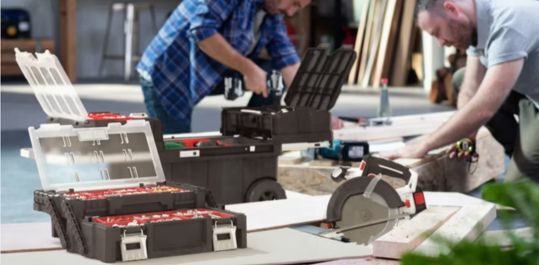

Before you start buying tools or moving things around, it’s worth taking a step back and putting together a plan for your workshop. Think of it like designing your own little studio in the backyard. Ask yourself:
- What kind of projects will I be working on?
- What tools will I need?
- How much workspace do I want?
Answering these questions will help you figure out the size and layout of your garden shed workshop. Maybe you’re dreaming of a full woodworking setup with a sturdy workbench and plenty of storage, or maybe you just want a small DIY station for crafts and home repairs. Either way, mapping it out ahead of time will save you time, money and headaches later.
Shed-to-Workshop Plan
- Layout and flow: Where will your workbench go? Do you need space for multiple projects at once?
- Tool storage: Shelves, cabinets or pegboards—decide what will keep your tools organized and accessible.
- Lighting and electricity: Even if you’re not wiring it right away, think about where outlets and light fixtures could go. If you’re curious about easy options, solar-powered lights are a great choice for a backyard workshop shed.
- Climate considerations: Will you need insulation for hot summers or chilly winters? It might be worth checking out tips on insulating a shed to keep your workspace comfortable year-round.
Planning ahead also gives you a chance to explore backyard workshop ideas that fit your style and needs. By knowing exactly what you want, you’ll avoid buying furniture or tools that don’t fit and make the most of the space you have. A little prep can go a long way toward turning your shed into a workshop that’s both functional and inspiring.
Finding the Right Shed
Unless you already have an empty shed in your yard, your first step is finding the perfect shed for your workshop. Not all sheds are created equal, so it’s worth thinking about what will work best for your space, your projects and your style.
You’ll want to consider the following things as you research and shop:
- Material: Sheds come in wood, metal and resin. Wood can look beautiful but may require regular maintenance to prevent rot or warping. Metal is durable but can rust and get hot in the sun. Resin sheds are low-maintenance, weather-resistant and often come in wood-like finishes that fit right into your backyard.
- Size: How much workspace do you need? For larger projects or multiple hobbies, consider large garden sheds workshops that give you room for a workbench, storage and freedom to move around. Smaller sheds can work too, but make sure you won’t feel cramped once everything is set up.
- Insulation and ventilation: Even if you’re not planning to fully insulate your shed, thinking about airflow and temperature control will make a big difference. Proper ventilation keeps your backyard workshop shed comfortable and safer for working with dust or fumes.
- Doors, windows and style: Double doors make it easier to move tools or larger items in and out. Windows let in natural light, which is great for detailed work, and a shed that matches your yard’s aesthetic will feel like a natural extension of your home.
You’ll want to carefully consider the material your shed is made from, and how durable that material is. The most popular materials include wood, metal and resin. They’re all pretty decent options until you realize that the wood and metal require a lot of maintenance or else they can crack, rot, rust or peel. Resin doesn’t do any of those things; it’s low maintenance, has a gorgeous wood-like look and comes in so many styles. In addition, most sheds don’t come with any kind of insulation, so you’ll want to read up on insulating a shed.
So, finding a shed that can be easily converted into a workshop while also being beautiful and functional is key. If you’d like to learn more about the most popular shed types on the market, we have an in-depth blog about the pros and cons of each shed material type.
Lighting and Electricity
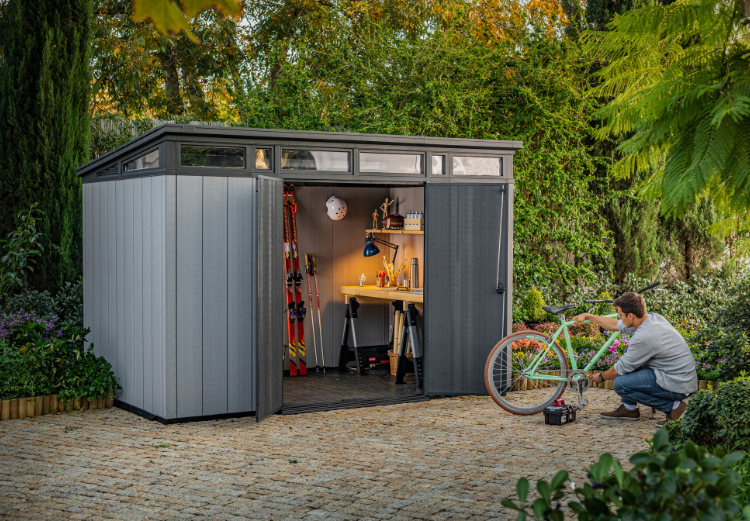

One of the most important things to think about for your workshop shed with electricity is, well … the electricity. Good lighting and power access can make or break your workspace. After all, even the best workbench isn’t very useful if you can’t see what you’re doing or don’t have power for your tools.
If you’re planning to use power tools or electronics in your shed, hiring an electrician to safely wire in outlets and overhead lighting is the best move. Properly installed electricity gives you peace of mind and ensures everything is safe and functional.
Not ready to wire your shed just yet? No problem. You can start with battery-operated or plug-in lights. Puck lights, LED strips and portable work lights are great for getting started. Some even come with remote controls, making it easy to switch your shed from a workspace to a backyard hangout when you’re done.
Another option for a backyard workshop shed is solar-powered lighting. Solar lights are low-maintenance, easy to install and don’t require running electrical lines. They’re perfect for sheds where you want to save energy or keep wiring simple. If you want tips, you can check out our guide to solar lights for sheds.
With proper lighting and power, your shed can function just like an indoor workshop, but with all the fresh air and flexibility of a backyard setup. It’s a small investment that makes a big difference in how usable and enjoyable your space is.
A Workbench
One of the biggest things you’ll need for your shed workshop is a workbench. This might be something you build yourself, or maybe you’ll buy a surface to use as a workbench. Having a good sturdy workbench is really critical to having your own workshop.
So, if you don’t have one, start figuring that out ASAP. It also might be good to have a few folding tables on hand in case you need a little extra space while you’re working on your storage shed workshop. Once you’re done with them, you can always fold them up and use them for other events, like the neighborhood barbecue your wife arranged to have at your home.
When planning your workbench, think about placement, too. You’ll want enough room to move around comfortably, easy access to your tools and good lighting from windows or installed fixtures. A little forethought here makes your shed feel more like a proper workshop and less like a crowded corner of your backyard.
Shelving or Cabinets for Your Tools
You can have the perfect shed workshop, but without proper storage, it can quickly become cluttered. Once your shed, lighting, insulation and workbench are in place, it’s time to think about shelving and cabinets for your tools.
Keter’s shelving and storage accessories are ideal for this. They’re designed to fit inside Keter sheds without any drilling or modifications. So, you can keep your tools and supplies organized safely and efficiently. Shelves hold everything from small hand tools to larger items, and the enclosed cabinets give your shed a polished, tidy look while protecting your equipment from dust and weather.
Using these storage solutions keeps your backyard workshop shed functional and organized, so you always know where your tools are when inspiration strikes. Plus, it makes cleanup fast and easy. So, there’s no more hunting for misplaced screws or tangled cords!
Locking the Shed
If you’re keeping expensive tools and equipment in your storage shed workshop, you might want to utilize some security measures. Adding a simple item like a padlock to the door or something more complex like a camera watching the shed at all times can make a big difference in the safety of your workshop. So, just keep it in mind as you put together your plans.
Once you’ve created your workshop plan and figured out all of the other elements we’ve talked about above, you should be well on your way to creating the perfect backyard workshop shed.
Looking for a shed that’s ready for your projects? Keter offers some of the most durable,
Frequently Asked Questions
Shed-to-Workshop Conversion
How do I turn a shed into a workshop?
What size shed do I need for a workshop?
Can I have electricity in a shed workshop?








We build in a sustainable manner.
We use innovative technologies and sustainable materials to build planet-friendly products that last a lifetime.