

Are There Weather Resistant Sheds?
When it comes to battling the biting cold of winter, rain, snow, or the chilly winds of frigid autumn, your choice of weather-resistant sheds can be the unsung hero in keeping your stored belongings safe and secure. As the seasons change and temperatures plummet, understanding what the best materials for outdoor sheds are and what a weather-resistant shed is becomes really important.
Whether you're stashing garden tools, protecting your outdoor furniture or simply looking for extra storage space for the long winter months, the right all-weather storage shed can make all the difference. In this blog, we'll explore the most popular types of storage sheds and how they fare in cold weather. We'll delve into three of the most common shed materials – wood, metal and plastic/resin – to determine how each of them performs when the mercury drops.
Understanding the Key Factors for Cold Weather and Winter Sheds
The cold can be a formidable adversary for the durability of your shed. Before we talk about the specific characteristics of wood, metal and resin sheds in colder weather, it's important to understand the fundamental challenges these structures face. The biggest challenge lies in temperature fluctuations and moisture. In colder climates, the freeze-thaw cycle can take a toll on shed materials, causing them to expand and contract, potentially leading to cracks, warping or other structural issues. Additionally, the moisture that often accompanies cold weather can be really bad for a shed, promoting rot and rust in susceptible materials.
UV protection, proper anchoring and reinforced construction are other factors that help determine a shed's performance in winter. Effective insulation is like a warm blanket for your shed, helping maintain a stable internal temperature and preventing temperature-related damages. You’ll probably need to add insulation to most sheds, and there are several different options when it comes to the best type of insulation for your situation.
Material strength, on the other hand, dictates how well a shed can withstand the physical stressors of cold weather, such as heavy snow loads or gusty winds. Weather-resistant sheds also protect against rain, sleet and snow, preventing the elements from infiltrating the structure. By understanding and considering these factors, you'll know how to buy the ideal cold-weather shed for your situation.
How Different Shed Types Fare in Colder Weather
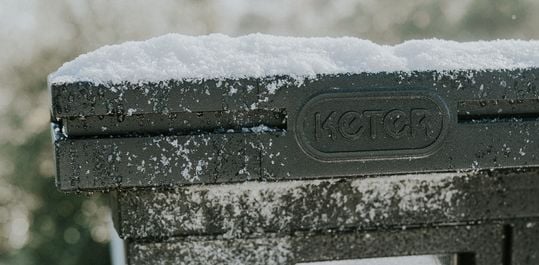

Wood
Pros
- Natural insulation provides thermal protection
- Shields stored items from harsh temperatures
Cons
- Vulnerable to moisture
- Moisture could cause mold or rot
- Requires diligent maintenance
Metal
Pros
- Durable and tough
- Minimal maintenance requirements
Cons
- Poor insulation
- Susceptible to rust and corrosion
- Stored items may be subject to temperature fluctuations
Resin
Pros
- Excellent insulation
- Resistant to mold and rot
- Low maintenance
Cons
- In high winds they may be more susceptible to shifting if not anchored properly


Shed Type #1: Wood Sheds: The Classic Option
Wood sheds have long been a beloved fixture in the world of outdoor storage, known for their timeless charm and the unmistakable scent of timber. These sheds have a traditional appeal that resonates with many homeowners.
Pros
In colder climates, wood sheds have a few advantages. Their natural insulation properties are a standout feature, providing a level of thermal protection that keeps stored items shielded from harsh external temperatures. This natural insulation can keep your belongings safe from frosty weather. Additionally, wood sheds contribute to the overall aesthetics of your outdoor space, enhancing the visual appeal of your property. However, the look won’t impact how weather-resistant it is.
Cons
Wood sheds in colder climates do come with their fair share of challenges. Their vulnerability to moisture and pests is a notable drawback. The very moisture that often accompanies cold weather can infiltrate wood sheds, potentially causing rot or mold, and attracting wood-destroying pests like termites. Furthermore, wood sheds require diligent maintenance. Over time, they can be susceptible to rot, rust and peeling, which necessitates regular upkeep to ensure their longevity and structural integrity. In regions with severe winters, this can be a demanding task, making wood sheds a choice that calls for commitment and dedication to their care.
Shed Type #2: Metal Sheds: The Durable, Yet Chilly Option
Metal sheds bring an air of modernity and industrial strength to the world of outdoor storage. They are typically made from steel or aluminum, offering a sharp contrast to the natural aesthetics of wood. Metal sheds are often appreciated for their durability and toughness, which make them capable of withstanding the test of time and weathering the harshest elements.
Pros
In colder climates, metal sheds have their share of advantages. The foremost of these is their exceptional durability and resistance to pests. Metal sheds are impervious to wood-destroying insects and rodents, providing a more secure place for your stored items than a wooden shed that can rot or be penetrated by pests.
Cons
Metal sheds have some drawbacks when it comes to being weather-resistant in the cold. One of the most significant issues is their poor insulation and temperature control. Metal is an excellent conductor of heat, meaning that in cold weather, the interior of a metal shed can become frigid. Without additional insulation measures, the stored items may be subject to temperature fluctuations. These sheds are also susceptible to rust and corrosion, especially in regions with high humidity or heavy snowfall. Without proper protection and maintenance, the metal's integrity may deteriorate over time, compromising the shed's structural soundness.
Shed Type #3: Resin Sheds: The Best Material For Outdoor Sheds in the Winter
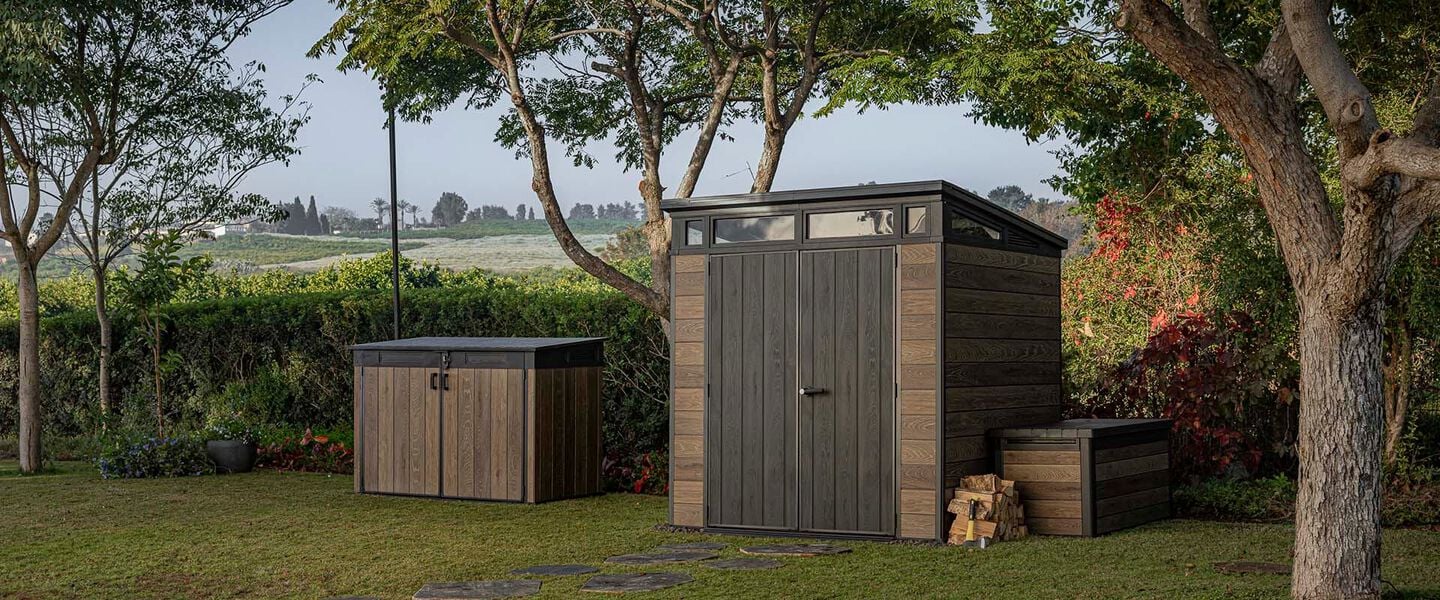
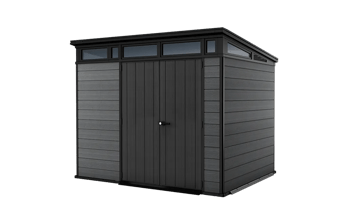
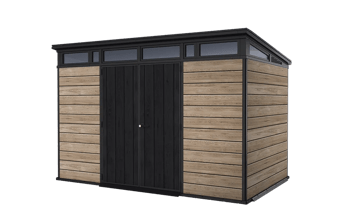
Resin shed kits represent a modern and really innovative approach to outdoor storage, harnessing the power of contemporary materials to address the unique challenges posed by colder climates. They are weather-resistant, which helps to ensure stored items remain shielded from the elements. They resist rot, mold and termite infestations, making them ideal for all-weather garden sheds. With low maintenance and strong construction, resin sheds can handle winter’s rain and snow without extra work. Features like reinforced floors, skylights, high ceilings and ventilation systems enhance both function and durability. They also look just like wood, but they don’t require all of the upkeep and headaches wood brings.

Pros
In colder climates, resin sheds shine in several key areas. They shield your stored items from harsh weather conditions with little to no maintenance required. With the addition of insulation, a resin shed can provide a better place for your stored items than sheds made from other popular materials.
The structural integrity of weather-resistant resin sheds is also not compromised by rot, mold or termite infestations, making them a reliable choice for cold-weather storage. In addition, resin sheds boast low maintenance requirements and impressive longevity. They require minimal upkeep, even in the face of winter's worst. They are built to withstand years of use, making them a wise investment for homeowners in colder regions.
Other features, such as sturdy floors, high ceilings, skylights and built-in ventilation systems, contribute to the functionality and resilience of resin sheds, making them the preferred option for those looking for a tough winter shed.
Cons
The main con to consider when getting a resin shed is that they can be more susceptible to high winds if they are not anchored properly.
If you’d like to read more about the pros and cons of each shed material type, check out our blog about resin vs. wood vs. metal, where we do a deeper dive.
Comparison and Final Verdict
After examining the attributes of wood, metal and resin sheds in cold weather, it's clear that each option has its merits and drawbacks. Wood sheds, with their classic charm and natural insulation, offer appeal but come with challenges of moisture vulnerability and high maintenance. Metal sheds, while durable and low-maintenance, struggle with temperature control and rust susceptibility in cold climates. On the other hand, resin sheds are a great choice. Resin sheds are a reliable, low-maintenance option: weather-resistant sheds that resist moisture, are UV-resistant, resist pests and handle shed snow as well as rain with ease.
No matter the shed type, regular upkeep is paramount. In colder climates, the rigors of winter can take a toll, and proactive maintenance can mean the difference between a shed that endures the elements and one that succumbs to the challenges. By heeding these maintenance tips, your shed will remain a reliable shelter for your belongings through even the harshest of winters.
If you’re looking for a low-maintenance option that is weather-resistant and has little to no maintenance needs, resin sheds from Keter are the way to go. The sheds come in a wide variety of sizes and colors to fit any aesthetic.
Frequently Asked Questions
Outdoor and Weather-Resistant Sheds
What is the most durable outdoor shed?
How do you make a shed weather-resistant?
What are the different types of sheds?








We build in a sustainable manner.
We use innovative materials and leading technologies to build planet-friendly products that last a lifetime.