
Sheds With Shelving vs. Freestanding Storage: What's More Efficient?
TL;DR: A shed with shelving built in (or paired with a shelf kit made for it) almost always beats loose freestanding storage, because it uses wall space instead of floor space. That means more room for bikes, tools and bins in the same footprint. Freestanding shelving still works if you just need a little extra organization in a shed you already own, but check that it's actually built for outdoor use. Resin shelving holds up best against moisture and temperature swings, and vertical sheds benefit the most from shelving since they've got height to spare.
Every backyard eventually hits the same wall. You've got a shed, but somehow it's still a mess. Rakes leaning in corners, boxes stacked three high and that one bag of potting soil you can never find when you need it. If this sounds familiar, the problem usually isn't the shed itself. It's what's (or isn't) inside it.
That's where the shed with shelving versus freestanding storage debate comes in. Both can work. But one usually wins out when it comes to actually using your space well, not just filling it up.
What "Freestanding Storage" Really Means
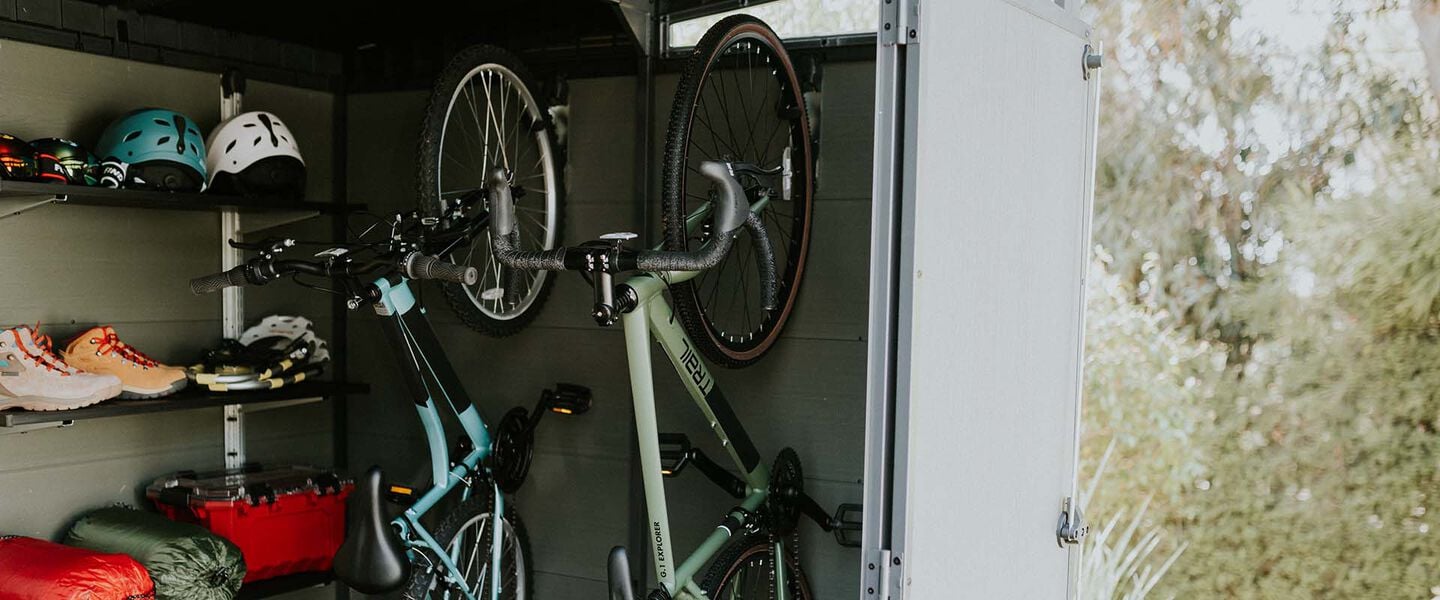
Freestanding storage is exactly what it sounds like: separate shelving units, bins or racks that you buy and place inside your shed on your own. You pick the pieces, you figure out the layout and you hope everything fits.
It sounds flexible, and it can be. But it comes with a catch. Freestanding units take up floor space, which is exactly the space you're trying to save in the first place. A shelf that sits four inches off the wall doesn't sound like much until you multiply that gap by every wall in a small shed.

What a Shed With Shelving Actually Gives You
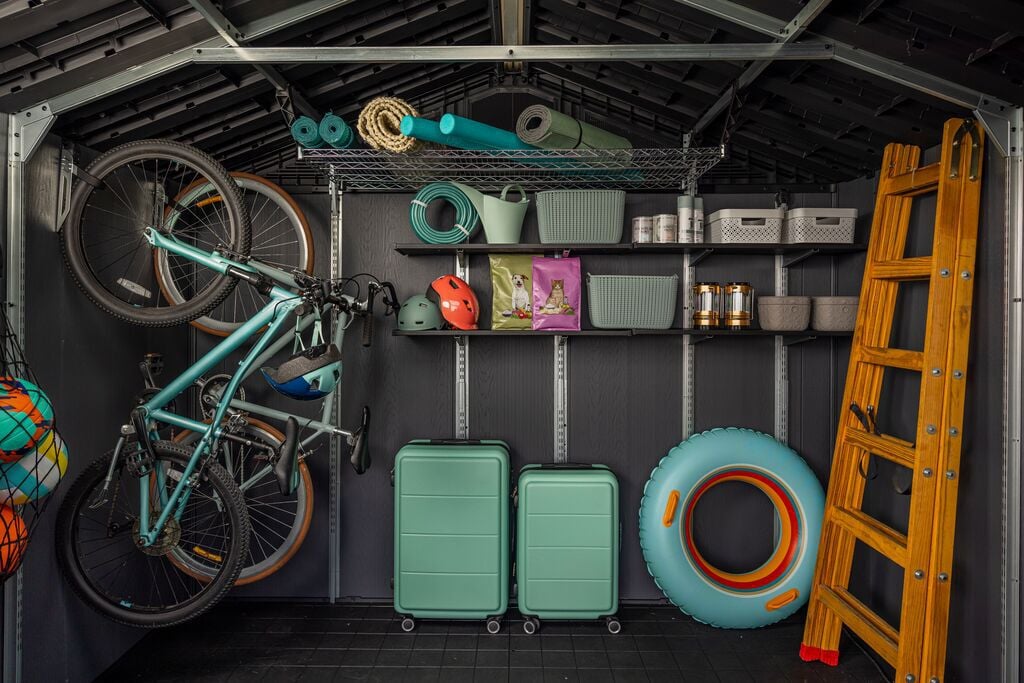
A storage shed with shelves built into the design (or shelving made specifically to mount to that shed's walls) works differently. The shelves are part of the plan from the start, not an afterthought squeezed in later.
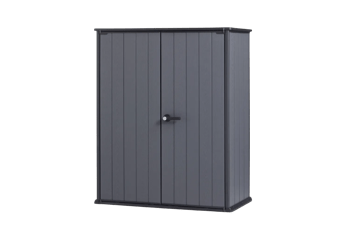
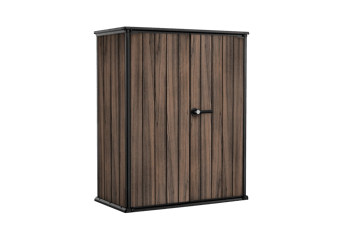
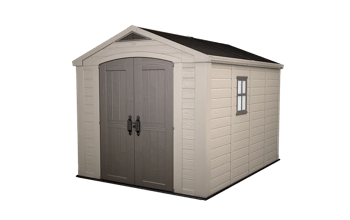
Take something like Keter's Signature vertical shed. It comes with shelving that’s ready to go. So, you're using wall space instead of floor space right out of the box. Or look at a resin storage shed with room for shelves like the Signature 11x7 storage shed Signature line.
The difference sounds small on paper. In practice, it can mean fitting a full season of gardening tools, pool supplies and bikes into a shed that would've felt cramped with loose bins scattered across the floor.
It is worth noting, Keter also sells a shelf kit separately for people who already own a Keter shed without built-in shelving. It's not a one-size-fits-all add-on though. It's designed to work with certain Keter shed models. So, it's worth checking your shed's model number against the kit's compatibility list before you buy.


Purchase now
Signature Vertical Storage Shed - Rosewood Brown
CLEARANCE | Free Shipping
CLEARANCE | Free Shipping


Storage Efficiency Comes Down to Vertical Space
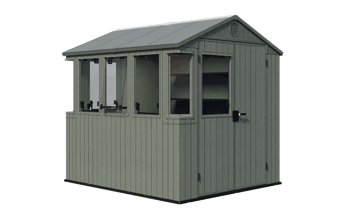
Most people don't think about this until they're standing in their shed trying to find a hand trowel. Floor space runs out fast. Wall space, especially in a shed with a peaked roof, usually just sits there empty.
An outdoor shed with shelves takes advantage of that unused vertical space. Instead of stacking boxes on the ground (where they get harder to reach and easier to forget about), you're using shelves to organize by category. Gardening supplies on one shelf, pool gear on another and seasonal decorations up top where you won't need them until, well, that season. It's the same logic organizers use for tight closets and small rooms: if the floor's full, look up.
This matters even more in a small outdoor shed with shelves. When your square footage is limited to begin with, every inch of wall you're not using is storage you're leaving on the table. A vertical shed with shelves is built around this exact idea. It's narrow on the ground, but tall enough that shelving turns it into real storage instead of just a box to shove things into.
Cost and Setup: Which One Actually Saves You Money?
Freestanding shelving units aren't expensive individually, but they add up. A few wire racks, a couple of plastic bins, maybe a tool rack you saw online. By the time you've furnished your shed, you've spent almost as much as you would've on a shed that came shelf-ready.
A storage shed with shelves included, or a shed paired with a compatible shelf kit like Keter's 40-inch shed shelf kit, tends to be more straightforward. You know what you're getting, it's designed to fit and you're not guessing whether a shelf from one store will actually work in a shed from another. Each shelf on that kit holds up to 66 pounds, which covers most gardening tools, paint cans and storage bins without a second thought.
There's also the assembly side of things. Loose shelving units each come with their own instructions, their own hardware and their own quirks. A shed shelving system designed for your exact model skips a lot of that guesswork.
.jpg?sw=1024)
.jpg?sw=20)
Durability Matters More Than People Expect
If you're storing anything outdoors, even in a shed, moisture and temperature swings are part of the deal. A plastic shed with shelves made from resin holds up well here. It won't warp, crack or rust the way a bargain wire shelf might after a few humid summers.
This is worth thinking about with freestanding storage, too. A lot of budget shelving units aren't built for the swings in temperature and humidity that happen inside a shed, even a weather-resistant one. Resin shelving built specifically for outdoor storage sheds, on the other hand, is made to handle exactly that kind of environment. It also tends to hold up over many years with very little upkeep.
So Which Setup Is More Efficient?
If your priority is squeezing the most usable storage out of the smallest footprint, a shed with shelving built in (or designed specifically to match) usually comes out ahead. You get vertical storage from day one, less wasted floor space and shelving that's actually rated to hold what you're planning to put on it.
Freestanding storage still has its place. If you've already got a shed and just need a little extra organization here and there, adding a compatible shelf kit can be a smart, budget-friendly move. Just make sure whatever you add is actually built for outdoor use, so it holds up as long as your shed does.
Either way, take stock before you buy anything. Look at what you're storing, how often you actually need to grab it and how much wall space you've got sitting unused.
Once you've done that, the right setup tends to be pretty obvious, and your shed finally starts pulling its weight.
Frequently Asked Questions
Shed Shelving
Is a shed with shelving better than a freestanding shed?
Can you add shelves to any storage shed?
How much weight can shed shelves actually hold?
What's the best material for outdoor shed shelving?
Is a vertical shed with shelves a good option for a small yard?
Do I need special tools to install shed shelving?




We build in a sustainable manner.
We use innovative technologies and sustainable materials to build planet-friendly products that last a lifetime.