
How To Turn a Shed Into Your Own Potting Station or Mini Garden Center
If you've ever found yourself potting plants on the patio while juggling bags of soil, a watering can and a trowel that keeps rolling off the edge, you already know you need a better setup. A dedicated potting station or small gardening shed changes how you garden. Not a little. A lot.
You don't need a huge space. You don't need to spend a ton of money. You need a plan and a shed that fits your yard.
What Is a Potting Shed (and Do You Need One)?
A potting shed is set up specifically for gardening work: starting seeds, repotting plants, mixing soil, storing tools and keeping supplies where you can actually find them. Some are elaborate, with built-in shelving, lighting and even running water. Others are simple; a small shed with a potting bench table inside and a few shelves along the wall.
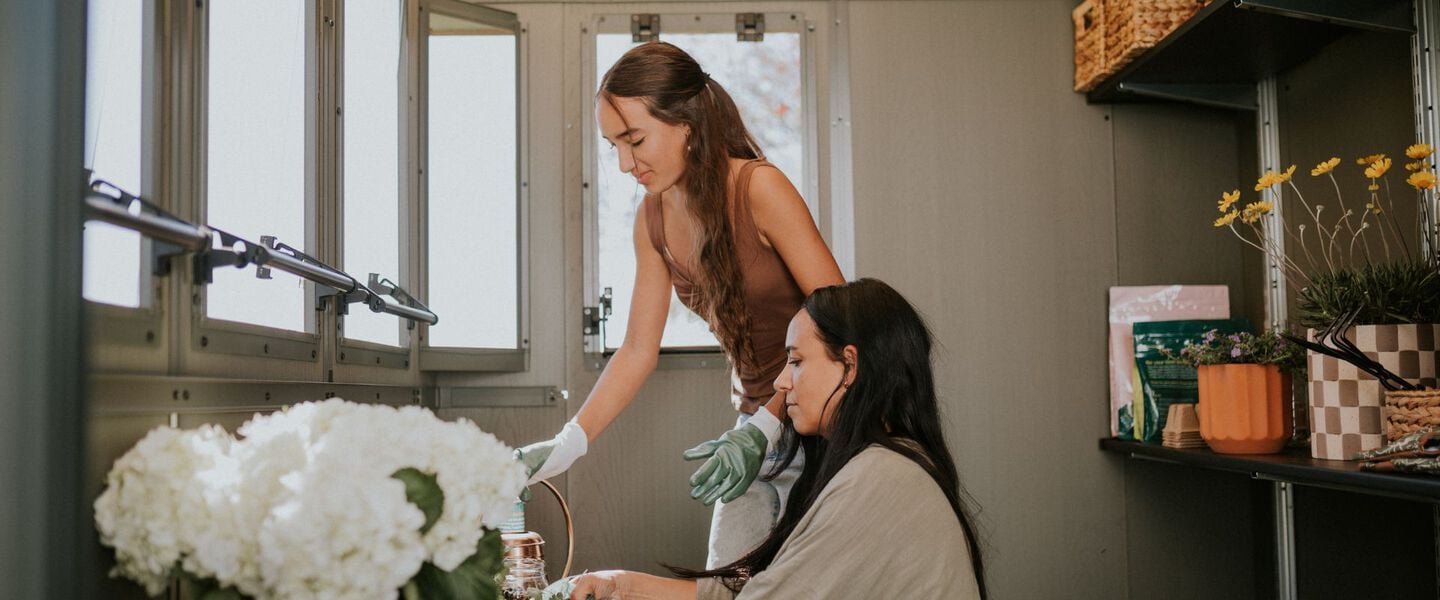
The difference between a potting shed and a regular outdoor shed mostly comes down to the inside setup and the amount of lighting there is in the shed. A regular shed holds the lawnmower and last year's holiday decorations. It might have a window or two. A potting shed, on the other hand, is organized around your gardening tasks, and has a lot of windows. The biggest feature of a potting shed is all of the windows that are getting light to your plants.
How Big Should a Potting Shed Be?
This comes up constantly, and the honest answer is: smaller than you think.
A 6x6 or 6x8 space fits a potting bench table, basic shelving and your most-used tools and supplies. If you want to store larger items, too, a wheelbarrow and bags of mulch, an 8x10 or bigger gives you room to move around.
Start by thinking about what you'd actually put inside. Sketch it out. Then add a little extra square footage for big projects and for the inevitable moment when your garden supplies triple over the winter. (They always do.)
Setting Up Your Potting Station: What to Put Inside
A Potting Bench Table
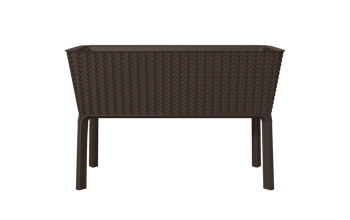
If your shed isn’t a potting shed, specifically, you’ll need to add a few things. This is the centerpiece of the whole setup. A potting bench table gives you a dedicated work surface at the right height so you're not hunched over the ground every time you're repotting. Look for one with lower shelves or cubbies underneath; that's prime real estate for bags of soil, perlite and compost.
Some people build their own bench. Others find a freestanding one that fits right inside their shed. Either way, make sure it's easy to wipe down because soil goes everywhere.
Shelving and Wall Storage
Don't let wall space sit empty. Shelves give you a place to line up seed packets, small pots, spray bottles and fertilizer. The Keter potting shed comes with shelving. So, you have space designed to assist with your gardening needs.
The more you can get up off the floor, the more actual working space you'll have down where it counts.
Soil and Supply Storage
Bags of potting mix are bulky, and they get messy fast. A small trash can with a lid works surprisingly well for keeping an open bag of soil fresh and contained. Stackable bins handle extra supplies like plant food, labels and twine. Keep like things together and you'll actually be able to find them mid-project.
Lighting
Natural light is great, but a simple battery-powered LED fixture or a rechargeable light on a timer makes a real difference, especially in early spring when you're starting seeds before the days get long.

What Not to Store in a Potting Shed
A potting station works best when it stays focused. A few things don't belong in there:
- Gasoline or fuel. Store these separately in an approved container, away from fertilizers and growing supplies.
- Pesticides near seedlings or starts. If you keep these in your shed, store them high up in a locked cabinet, well away from anything you're actively growing.
- Open bags of food. Birdseed, pet food or anything like that in an unsealed bag invites mice. Use sealed containers if you store these nearby.
- Stuff that has nothing to do with gardening. Sheds collect clutter fast. Keep your potting shed focused on gardening, and it'll stay usable.
What Makes a Good Shed for a Potting Station?
A few things matter a lot when you're picking a shed to use as a potting shed or garden house.
- Windows or ventilation. You want airflow when you're working with soil and fertilizer, and windows bring in natural light that makes the whole space more pleasant to spend time in.
- A weather-resistant build. You need something that holds up to rain, humidity and temperature swings without rotting, warping or rusting out. Resin sheds are a great option here. They don't need painting or staining, they're easy to clean and they hold up to the elements year after year without a lot of maintenance.
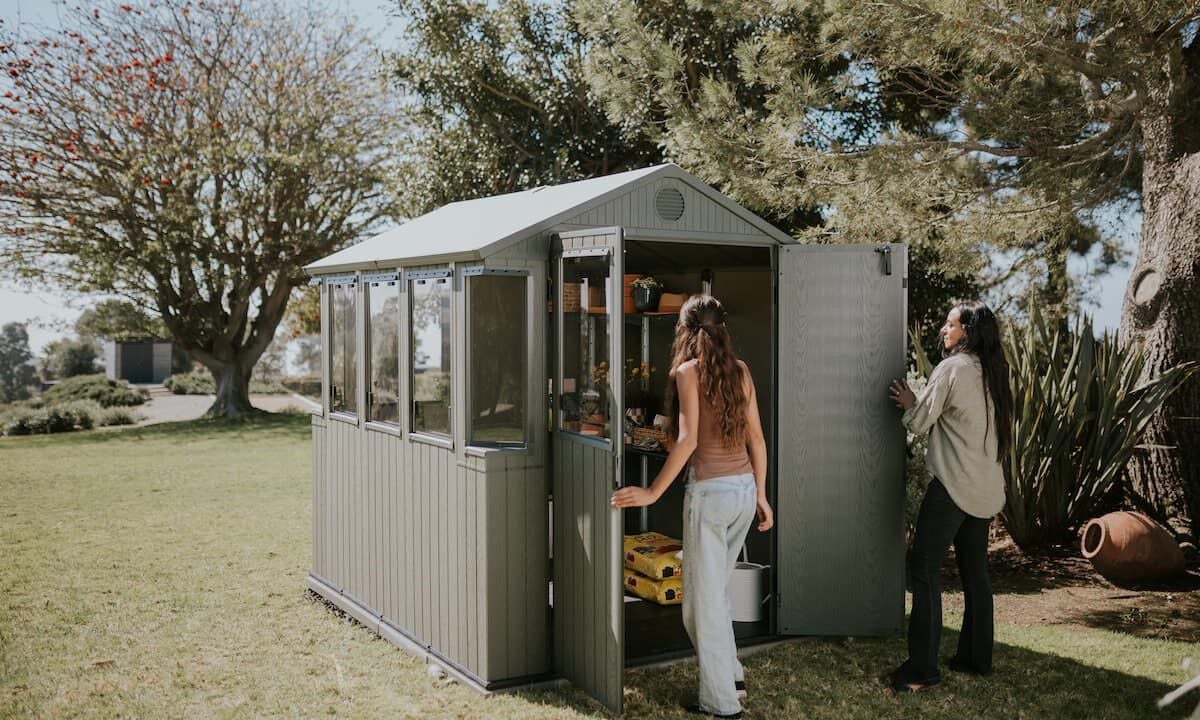
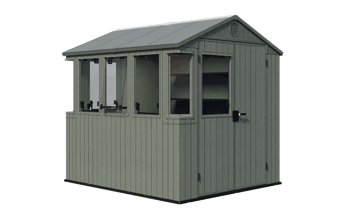
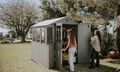
If you want a shed built specifically for this kind of setup, the Keter Darwin 6x8 Potting Shed is worth a serious look. It actually won the Garden Landscaping gold at the 2025 GIMA Awards, and it's easy to see why. It has a hybrid roof with a translucent section that pulls in natural sunlight, five windows that open for ventilation, and two fixed corner windows so the inside stays bright and airy. It locks on both sides, the resin material holds up without fading, and it needs almost no maintenance. It's designed to be a potting shed, not just a shed you're adapting into one.
Potting Sheds vs. Greenhouses: What's the Difference?
People mix these two up a lot, and it's a fair question.
A greenhouse is built to grow plants year-round. The walls and roof let in sunlight from all sides, and the structure stays warm enough to extend the growing season well into cold months.
A potting shed is a workspace. It's where you do the prep (starting seeds, repotting, mixing soil) before plants go out to the garden or into a greenhouse. Most potting sheds aren't designed to keep plants growing long-term.
That said, plenty of people add a grow light setup inside their potting shed and use it for starting seeds in late winter. It works well for that. If you want to grow plants through a cold season, though, a dedicated greenhouse (or a shed with large windows and a heating source) is a better fit for that goal.

Making Your Potting Station Work All Season
The thing about having a dedicated potting shed is that it makes gardening easier at every point in the year, not just when everything is blooming. In late winter, it's where you start seeds under grow lights. Come spring, it's a staging area for everything going into the ground. In fall, it's where you store tender bulbs and clean up tools before winter arrives.
Set it up once, and it's ready every time you need it. That's the point.
If you've been thinking about getting a small gardening shed or turning the one you have into a proper planting shed, start there. Get the shed, set up your bench and make it yours. You'll wonder why you waited as long as you did.
FAQs
Potting Sheds
How to turn a shed into a potting shed?
What not to store in an outdoor shed?
How big should a potting shed be?
What's the difference between a shed and a potting shed?








We build in a sustainable manner.
We use innovative technologies and sustainable materials to build planet-friendly products that last a lifetime