
How To Organize Construction Tools with Stackable Tool Boxes
TL;DR: Stackable tool boxes only earn their keep if you set them up right. Pull everything out, sort by tool type and by the jobs you actually do, pick a system built to split apart cleanly (not just stack), and give every box one clear job. Load heavy boxes on the bottom, label as you go, and reset the whole system every few months as your tools change. Do that, and you can grab one box for a job instead of hauling the whole truck.
If you've ever packed the whole truck for a job that only needed half of what's in it, you know the problem. Most construction tool storage solutions aren’t built to be split up. You either haul everything or you dig through everything, and neither one is fast.
Stackable tool boxes for construction fix that, but not just because they're organized. The real win is that they come apart. Sort tools right, and you can grab the exact container you need for a given job and leave the rest at the shop.
In this post, we’ll walk through the best way to organize a tool box and how to set up a stackable system that's organized while also being built for grab-and-go.
Start With a Full Inventory
Before you touch a single box, pull everything out. All of it. Every bit, every blade, every extension cord jammed in the corner of the truck bed. We know, that’s a lot, but it works.
Lay it out by category: power tools, hand tools, fasteners, safety gear, cords. You'll find duplicates. You'll find broken stuff. You'll probably find a tool you forgot you owned.
Toss what's dead. If it's been sitting untouched for two years, it's not coming back into rotation. What's left is what your system actually needs to hold.
Sort by the Job, Not Just the Tool Type
Here's where a lot of organizing advice will stop short, too. Most people will tell you to group tools by category and call it done. Circular saw blades with circular saw blades, wrenches with wrenches. Fine as far as it goes.
But think about how you actually work. For example, a framing day and a finish-carpentry day don't need the same gear, even though both pull from "hand tools." If you sort only by category, you'll still be hunting through everything every time you head out.
Try sorting two ways at once: by tool type first, then by which jobs each tool shows up for. A tape measure and a speed square belong together as "layout tools," sure, but they also belong in whatever module you grab for a framing day. Once you see those overlaps, you'll know which tools deserve their own dedicated box.
.jpg?sw=763)
.jpg?sw=20)
Select a Modular Tool Storage System Built to Split Apart
This part really matters most for the grab-and-go approach. You need plenty of stackable boxes that lock together fine, but not all of them are actually meant to be broken into smaller groups and carried separately.
A few things to check before you buy:
Look for modular tool storage systems that connect and disconnect cleanly, without tools or a fight. If popping one module off the stack takes effort, you'll stop doing it and be back to hauling the whole thing.
Check that each box can stand and carry on its own. A tray that only works while it's part of a bigger stack isn't a real module, it's just a drawer.
Make sure sizes vary enough to match real jobs. A deep box holds a drill and driver set for one job. A shallow tray holds fasteners for another. You want to be able to grab either one without disturbing the rest of the stack.
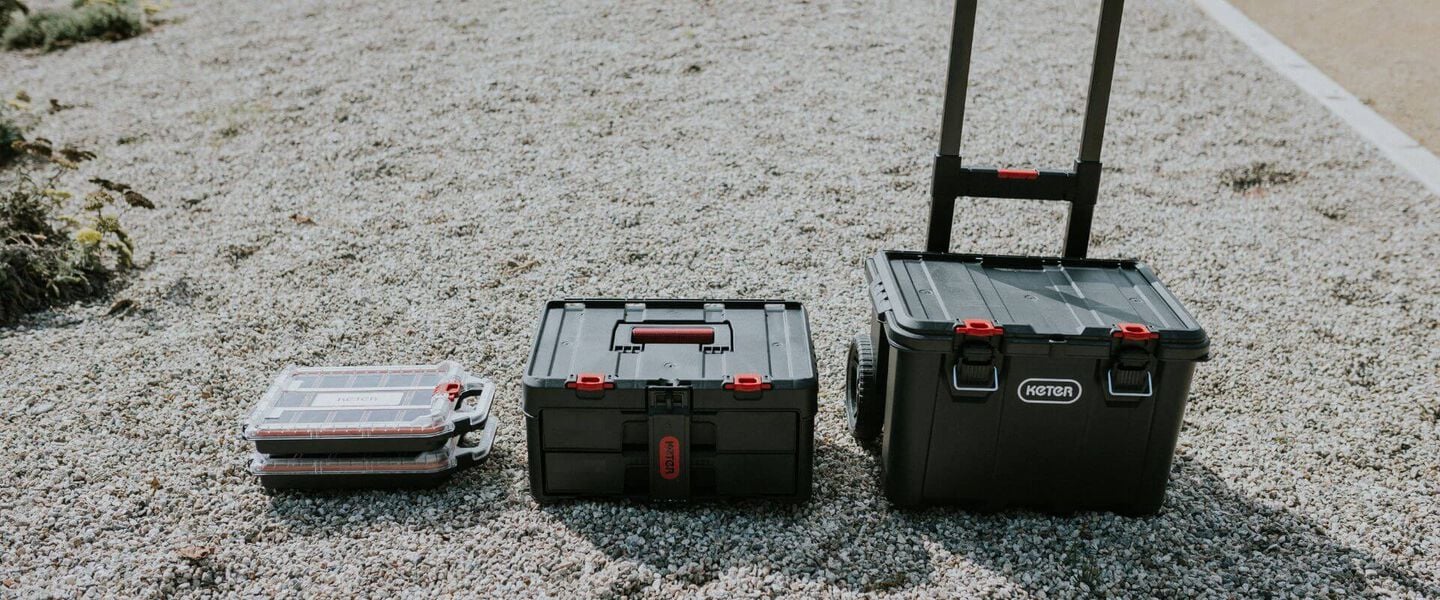
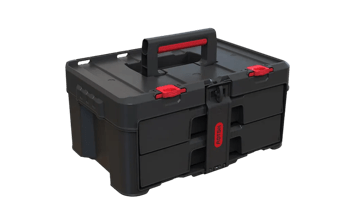
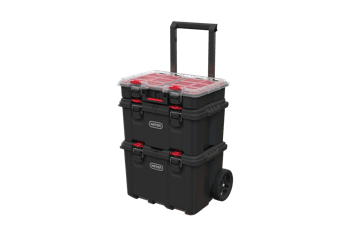
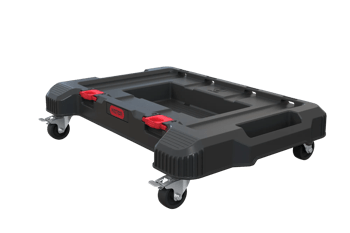
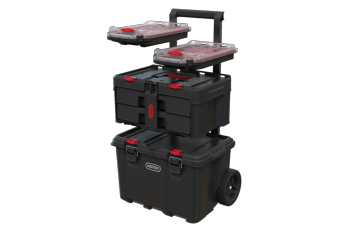
Keter's stackable tool box lineup is worth a look. The boxes on many models, like the Stack & Roll 2.0 Tool Storage System, lock together securely for storage, but each one lifts off clean when you need to take just that piece with you.




Give Every Box a Job
This is the same concept as giving every item a “home” when organizing a shed or house. Once you've got your portable stackable tool boxes for job sites, don't just fill them up in whatever order feels convenient. Decide what each one is for first.
One box for power tools and batteries. One shallow tray for bits and driver tips. One for the hand tools you use on a typical framing day. One for fasteners. This is also where the grab-and-go plan really pays off. So, if you know Box 3 is "everything for a quick trim job," you can grab Box 3 and walk out the door.
When every box has a job, you always know where to look. You also always know where things go back, which is honestly the harder habit to build.
Handle Small Parts First
Small stuff is the hardest part of any tool organization system. Screws, anchors, washers, bits, they sink to the bottom of a box and turn into a mess within a week.
A few things that actually help:
Use divider trays or small bins inside your boxes. If your system didn't come with inserts, small plastic containers that fit inside work just as well.
Sort fasteners by type and size, and don't mix them. Label the compartments, especially if a crew shares the same boxes.
Keep your most-used bits on top. If you're reaching for the same three drill bits fifty times a day, they shouldn't be buried under anything else.
Pack Power Tools and Hand Tools With Grab-and-Go in Mind
Power tools and hand tools need different treatment, and it's really worth setting them up separately.
For power tools: stack the heavier items in a base unit or deep box, with a fitted insert if you can manage it. This keeps them from shifting around and protects both the tool and the box. Keep batteries with their tools, so a whole module (tool, battery, charger) can leave the shop together.
For hand tools, mid-size drawers or shallow trays work well. Group by what you use together, not just by what they're called. Hammer, nail sets and pry bar goes in one spot. Tape measure, pencil and speed square goes in another. If you can name the job that grouping is for, you've built it right.
Build the Stack for the Truck, Not Just the Shop
An organized system that only works sitting still in the garage isn't much of a system. Your boxes need to hold up in a truck bed, on an uneven floor and outside in whatever the day throws at it, which means the material matters. Look for impact- and weather-resistant resin construction if you're leaving boxes exposed on a job site.
A few things to keep in mind when you stack:
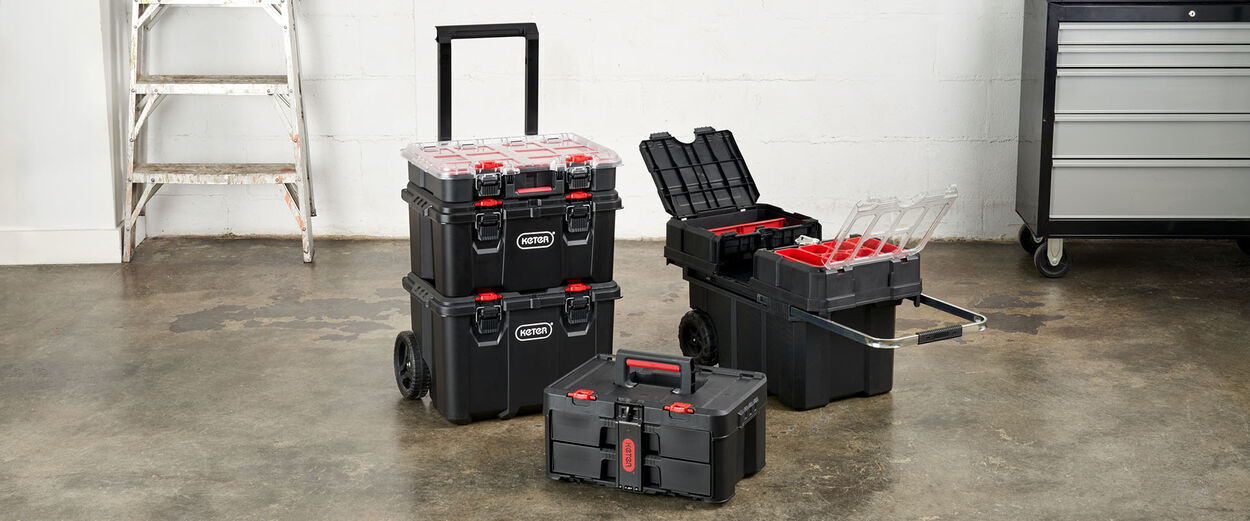
Load the heaviest boxes at the bottom. It sounds obvious, but it's really easy to just stack in the order you pack. A heavy box on top makes the whole stack unstable and harder to split apart when you need one piece.
Keep your most-used modules at a height you can grab without unstacking three other boxes first.
Label everything. A strip of tape with handwriting on it is enough. Some systems have label slots built in; use them, especially if you're pulling specific modules for specific jobs and need to spot the right one fast.
Don't overload past the weight limit. It stresses the locking mechanism and makes the whole stack wobble, which defeats the purpose of a system you're supposed to be able to break apart cleanly.

Keep Up With It
The best system in the world stops working the moment you stop maintaining it. This is where most people fall off, so don't feel bad if it happens, just get back on it.
A few minutes at the end of the day to put things back is enough. A really quick check every couple of weeks to toss worn-out bits and deal with clutter keeps things from sliding backward. If a crew shares your boxes, loop them in on where things go. A system only works if everyone uses it the same way.
When To Rebuild From Scratch
Systems drift. New tools get added, jobs change and what worked six months ago might not fit anymore. That's normal, not a failure.
Plan on a full reset a couple of times a year. Pull everything out, look at what you actually reach for and rebuild your storage around that. It goes faster the second time, since you already know what you use.
Organizing your tools this way pays off fast; less time hunting, less frustration mid-job and the ability to walk out the door with exactly what a job needs instead of the whole shop. Start with what you've got, sort it honestly and build ways to use it around how you actually work. Once everything has a place, and a purpose, the job gets easier.
Looking for a new modular tool storage system? Check out Keter’s selection of resin portable stackable tool boxes for job sites that are built to stack, split apart and go where the job takes you.
Frequently Asked Questions
Tool Boxes
What's the best way to sort construction tools for a stackable system?
What should I look for in stackable tool boxes for construction if I want to take pieces with me separately?
How do I keep small parts organized without losing them in the shuffle?
How often should I reorganize my tool boxes?
Can I really just take one box instead of the whole stack?






We build in a sustainable manner.
We use innovative technologies and sustainable materials to build planet-friendly products that last a lifetime.