
How To Keep Your Shed or Garage Organized With Stackable Tool Boxes
TL;DR: A messy garage doesn't have to stay that way. Stackable tool boxes give you a modular, grow-with-you storage system that actually works in a real garage. Pull everything out, sort by task and frequency, load your boxes with daily tools on top and heavy stuff on the bottom, and tackle small parts with divider trays and labels. Give your system a consistent home near your workbench, and spend a few minutes after each project putting things back. A little upkeep goes a long way.
If your garage has become the place where tools go to disappear, you're not alone. It starts with a few things tossed on a shelf, and before you know it, you can't find the drill you used last week or the right size wrench for anything. Good garage organization doesn't have to mean a full renovation or a weekend-long project. Sometimes the right storage system is all it takes to turn things around.
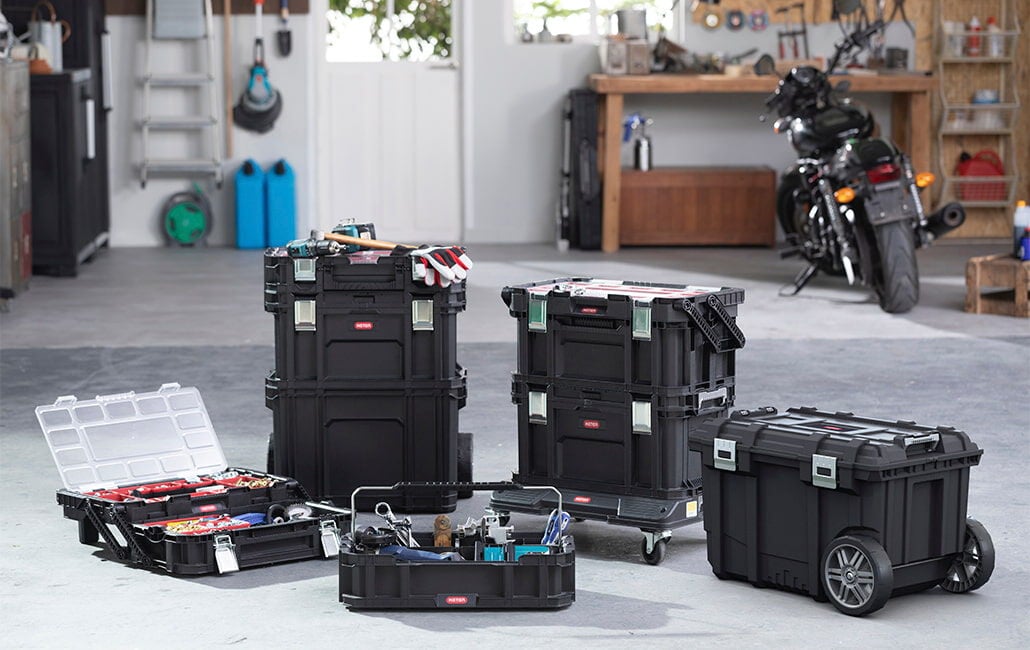
Stackable tool boxes are one of the most practical ways to get your garage under control. They're modular, they grow with your tool collection and they actually work in real garages where space is tight and things get messy fast.
1. Start By Pulling Everything Out
This step feels like a lot, but it's the one that makes the rest easier.
Pull your tools out of wherever they've ended up: the back of shelves, old buckets, random bins, the floor. Lay everything out and take a real look at what you have. You'll probably find things you forgot about, things that are broken or worn out, and duplicates you didn't know you had.
Toss what's done. (If a tool is broken and you haven't fixed it in two years, it's probably not getting fixed.) What's left is what your stackable system needs to handle, and knowing exactly what that is makes the next steps a lot more straightforward.
2. Sort Your Tools Before You Start Stacking
Random piles in organized boxes are still random piles. Before anything goes into a box, sort your tools into groups that actually make sense together.
A few ways to think about this:
- By task: Plumbing tools together, auto repair tools together, yard and lawn tools together and woodworking tools together. You grab what you need for a job, not one wrench from here and one from over there.
- By how often you use them: Daily tools need to be the easiest to get to. Seasonal stuff can go in a lower or less accessible box.
- By size: Big, heavy tools need different boxes than small parts and bits. Mixing them usually means neither is organized well.
Take a few minutes here. It saves a whole lot of back-and-forth later.
.jpg?sw=763)
.jpg?sw=20)
3. Choose Your Stackable Tool Boxes With the Space in Mind
Not every garage is the same size, and not every stackable system works the same way. Before you pick yours, think about how your garage is laid out and how you actually move around in it.
If you've got a workbench, a rolling base with your stackable boxes tucked underneath is a great setup. You can wheel it out when you need it and roll it back out of the way. If floor space is limited, a taller vertical stack on a fixed base might work better.
The things worth looking for in any stackable system: boxes that lock together securely so they don't shift when you move them, a mix of shallow and deep sizes so you can match the box to what's going in it, and a rolling base with good wheels if you'll be moving things around on a concrete floor.
Keter's stackable tool box and other tool organization options are built with the garage in mind. They connect solidly, hold up to real use and come in configurations that work for a single DIYer or someone with a much bigger tool collection. If you want ideas for building out your whole garage space, this guide to turning your garage into a functional workspace is worth a look.
4. Load Your Boxes in a Way That Makes Sense Every Day
Here's where a lot of people get tripped up. They organize by what fits, not by what they actually do. Think about your real garage routine and load accordingly.
- Top boxes are for your grab-and-go tools and smaller items: tape measure, screws, utility knife, pencil. The stuff you reach for constantly. Keep this box light and easy to open.
- Middle boxes are for heavier tools and accessories you use regularly. Screwdrivers, drills, sanders and saws you pull out a few times a month. Not every day, but not buried either.
- Bottom boxes or your rolling base are for the heaviest items and anything seasonal. The heavy stuff belongs at the bottom anyway for stability, so this one works out naturally.
Keep in mind that this isn't a rigid rule. Your setup depends on what you do in your garage. But thinking it through before you load up means you're not reorganizing everything three weeks later.
5. Deal With Small Parts Before They Take Over
Screws, bolts, drill bits, anchors, washers. These are the things that turn a tidy tool box into a junk drawer faster than anything else.
A few habits that actually help here:
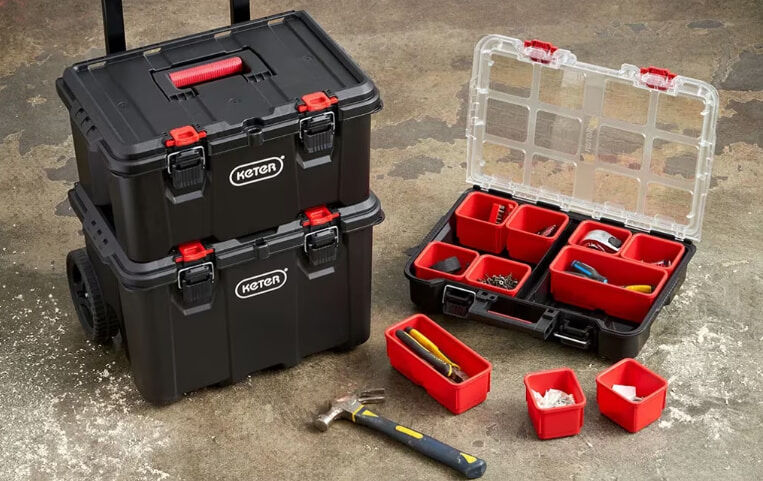
- Use divider inserts. Many stackable systems come with removable organizer trays or have compatible inserts. Use them. If yours didn't come with them, small plastic bins that fit inside the drawer work just as well.
- Sort by size, not just type. Don't mix screw lengths. Don't dump all your drill bits in one pile. Sorting by size means you can actually find the right one quickly instead of dumping everything out.
- Label your compartments. It doesn't have to be fancy. A piece of tape and a marker work fine. If other people in your household are using the same space, labeling helps everyone put things back in the right spot.
Small parts organization is the piece most people skip, and it's also the piece that makes the biggest difference once you do it.

6. Give Your Stackable System a Home in the Garage
One of the things that makes stackable tool boxes so practical for garage organization is that they're modular. You can move them, rearrange them and add to them as your needs change.
That said, giving your system a consistent home in the garage makes a real difference. Park it in the same spot. If you have a workbench, set it up right next to it. If you're working from the garage floor on projects, position it where you don't have to walk across the garage every time you need something.
The easier it is to put something back, the more likely it actually gets put back. That's most of the battle right there.
7. Keep Up With Your Shed or Garage Tool Organization
A good system only stays good if you do a little maintenance.
A few minutes at the end of each project to put things back is enough to keep things from sliding. Every month or so, do a quick check: anything worn out, anything that's crept into the wrong box, anything that doesn't have a home yet. Deal with it while it's still small.
A couple of times a year, pull things out and do a real reset. Tool collections grow and change, and your system should too. What worked six months ago might need some adjusting. That's normal.
You've Got This
Getting your garage organized feels like a big job until you break it down. Start with what you have, sort before you store and build a stackable system around how you actually use your space. Once everything has a place, keeping up with it is so much easier.
Your garage can be a space that actually works for you. Good for you for taking the time to make it happen!
Frequently Asked Questions
Garage Organization
What's the best way to start organizing a garage?
Are stackable tool boxes good for garage storage?
How do I organize a garage tool organizer for small parts?
How do I keep my garage organization from falling apart over time?
How do I organize a garage when I have a lot of tools?


Purchase now
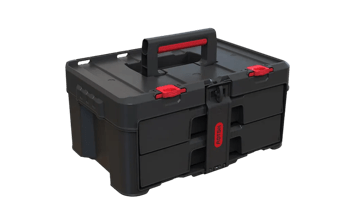
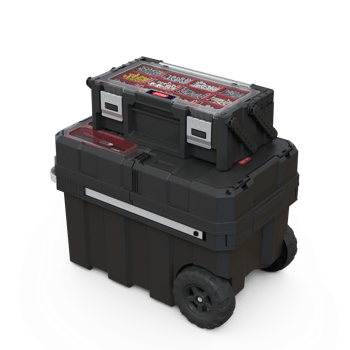
Masterloader Rolling Tool Box with Cantilever Organizer - Black
CLEARANCE | Free Shipping
CLEARANCE | Free Shipping








We build in a sustainable manner.
We use innovative technologies and sustainable materials to build planet-friendly products that last a lifetime