Resin vs. Wood vs. Metal Sheds: Which Material Is Better?
Building an outdoor shed is a great way to add extra storage space and stay organized, However, determining the type of material you want is the most difficult part. There are three common materials used for sheds - resin, wood, and metal. We’ll be outlining the advantages and disadvantages of each so you can understand the use cases of resin vs. wood vs. metal sheds to make the best decision.
Resin Sheds
Resin sheds are sheds that were created to be a more versatile, affordable, and sustainable shed material. It combines most of the benefits of wood and metal while addressing the large disadvantages of each material. Resin sheds are more environmentally friendly when compared to wood, and Keter takes that one step further by using 100% recyclable materials. In general, resin-based sheds are growing in popularity because of their versatility and simplicity. Take a look at the most asked questions about Keter sheds.
Pros
- Easy cleaning and low maintenance
- Rot, insect, and rust-resistant
- Easy to assemble
Resin sheds are designed with a purpose. They are created to be easy to clean, light enough to transport, and can be assembled in one afternoon. Moreover, resin sheds involve very little maintenance and are extremely durable and weather resistant. Keter promises to create weather-resistant resin products that won’t rust, rot, fade, peel, warp, or be affected by insects. With a variety of sizes available, resin sheds are a cost-efficient alternative to wooden sheds. Keter’s ability to use recycled materials also makes resin a sustainable and visually appealing alternative, as many of the sheds replicate the look and feel of wood without the negative environmental effects.
Cons
- Need to be anchored to a base
- Can bear limited weight on their walls
Fortunately, resin comes with limited disadvantages. Resin sheds need to be anchored to a base, can bear limited weight on their walls, and are pricier than metal sheds (but less expensive than wooden sheds).

Wooden Sheds
Wooden sheds are the first type of sheds that were ever created and produce a rustic and classic look that can enhance any space. They are usually assembled using framing lumber and pressure-treated polywood to create that traditional wood appeal.
Pros
- Strong and durable
- Visually appealing
- Easy to customize
The biggest benefit of choosing a wooden shed is that they are easy to customize and there are a wide variety of designs and sizes, making it easy to find something you like. They’re also very strong and durable without needing to be anchored to the ground. One of the major reasons many people pick wooden sheds is because they are visually appealing, making them a great choice if you’re looking for a shed that doesn’t take away from the aesthetics of your space. However, Keter does have resin-based sheds that replicate the look and feel of wooden sheds without the disadvantages associated with wood.
Cons
- Not insect, fire, or weather-resistant
- High maintenance
Unfortunately, there’s a reason why sheds are now created in a variety of materials. Wooden sheds come with many disadvantages, such as not being insect, fire, or weather-resistant. Wood is also not environmentally sustainable, pricier, and can easily rot. They aren’t the best option for anyone that wants a low-maintenance and weather-resistant option.
Metal Sheds
Metal sheds are a popular alternative to wood because they come in different gauges of thickness and are created using steel or galvanized aluminum. However, compared to wood and resin sheds, metal sheds come in very few designs that mostly look the same with limited features.
Pros
- Low maintenance
- Durable
- Fire, insect, and rot-resistant
Metal sheds are durable, inexpensive, and last a long time. Unlike wooden sheds, metal sheds are fire, insect, rot, and weather-resistant, making them a zero-maintenance shed option.
Cons
- Need to be anchored to a base
- Not resistant to rust
However, unlike wooden sheds, metal sheds must be anchored to a base and are limited in size, styles, and customizations. Metal sheds are not resistant to rust and because of the weight of the metal, it’s not easy to transport either. If you’re looking for a shed that you can work inside, is easy to assemble, and is visually appealing, we’d recommend you don’t choose a metal shed.
Common Questions
Is a resin shed better than a metal shed?
Choosing a resin vs. a metal shed depends on the purpose of your shed. Although resin sheds can be more expensive, if you are looking for a shed to work in, the resin is a better option as the metal will get very hot. Resin sheds are also easier to transport, and easy to assemble. The appearance and location of your shed also play an important role because resin sheds come in various textures to make the shed more visually appealing and easier to customize. However, if you’re looking for a durable and inexpensive shed, metal is the better alternative.
Are wood or resin sheds better?
Choosing between metal vs. wood comes down to what qualities you care the most about in your shed. If you are looking for a less expensive and weather-resistant shed, resin is the better option. Resin sheds are weather-resistant against rotting, peeling, rusting, insects, warping, and fading. Resin is also easier to maintain and assemble. If appearance is important to you, both resin and wood will give you the same classic wood appearance. This is because Keter provides resin-based sheds that replicate the look of wooden sheds with all the benefits of a resin shed. However, you can find wooden sheds that are pre-assembled and don’t need to be anchored to the ground. If you’re looking for a quick and easy solution that requires no assembly, wood is the better option.
Do I need to prepare anything before I begin building my shed?
The answer is yes! When you decide which shed type you would like to buy, you’ll need to read over the instructions or carefully research the preparations needed for that type of shed. For example, if you buy a resin shed kit, you’ll want to make sure you’ve located a flat surface to put it on. You’ll want to clear the area of any rocks or debris. Then you’ll want to put down the base of the shed. While this varies a little from shed to shed, you’ll always need a clear flat area for your shed so your base is level which will make the shed more sturdy. In some cases, you may even want to lay a foundation for your shed. You can make the foundation out of pavers, wood, or even concrete. This is totally based on preference and will depend on your outdoor space.
Which Shed Should You Buy?
The final decision on what shed to purchase comes down to your personal preference. The differences between resin vs. wood vs. metal can be narrowed down into 4 categories: price, durability, maintenance, and assembly.
When it comes to price, wood is the most expensive and least environmentally friendly option, the resin is the second-most expensive and the most environmentally friendly option, and metal is the cheapest but the hardest to transport and assemble.
All three materials are durable and will be able to hold anything you store. But you’ll want to remember which options are going to last the longest through the harshest weather elements. Wooden sheds are not necessarily waterproof and are not resistant to fire or rotting. Metal sheds are more durable as they are fire, insect, rot, and weather resistant. They can rust, but they are more durable to the elements vs. wood. Resin is the most durable because it’s weather-resistant to fading, rusting, warping, rotting, insects, and fire.
Assembly is the final factor to consider when purchasing a shed. Some wooden sheds are already built and just require you to install them. However, most wooden sheds are difficult to build and require a lot of work and patience. Metal sheds are also difficult to install and once they are built, it’s very difficult to transport a metal shed. Resin is the easiest to build and easy to move to a new location because of its lightweight material.
What kinds of issues can I run into while building or maintaining a shed?
If not done carefully and following instructions, there are many issues you can run into while building any type of shed whether it be wood, resin, or metal. It’s important to do your research if trouble arises. Just make sure you speak with an expert or research the problem carefully.
On another note, maintaining your shed year-round, no matter what material you decide to buy is critical to longevity. Make sure you’re inspecting the walls, checking the roof, and keeping an eye on the inside of your shed. This should prevent issues from getting more difficult to fix. For example, if you ran into the issue of water inside your shed, you might be wondering why is my shed leaking? You’ll want to look for any pools of water or discoloration inside the shed. Leaking is usually due to holes and cracks in the shed or maybe even damaged shingles on the roof. If you catch this problem early on, you can get it patched up quickly before the leak ruins too much inside the shed.
So, Which Shed Material is the Best?
While all three shed materials are durable and will get the job done, metal and resin are better alternatives for weather-resistant sheds that can handle the harshest conditions without any maintenance. Wood and resin sheds are the best if you care about the visual appearance of the shed. Resin sheds are the best option if you are looking for a shed that incorporates all the benefits of wood and metal as well as a sustainable option.
Overall, resin sheds were created to address all the disadvantages of wood and metal and are an affordable material for anyone that wants to purchase a shed and never think about it again. You won’t have to worry about fading, rusting, rotting, warping, and more. Simply assemble the shed and get to organizing.
Keter Resin Sheds and Storage Solutions
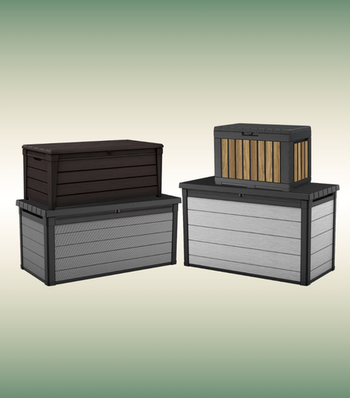
We encourage you to explore the various shed styles and sizes of sheds that Keter offers. If you are looking for other small storage solutions, Keter also sells boxes, storage benches, storage shed shelving and accessories that you can add to your sheds.
So, you might be wondering what type of resin Keter sheds are made from–and the answer is they’re made from a sturdy polypropylene resin that is durable and beautiful. Keter sheds stand up to the elements including sun, rain, snow, and even wind. The sheds also do this with little to no maintenance, unlike other shed types. Keter sheds are also eco-friendly. The resin is made from sustainable materials and the structures will last you for years to come. So, you won’t continuously need to send old rotting furniture to the landfill.
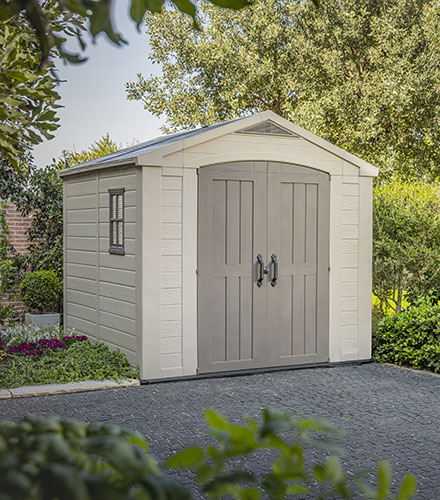

In a metal shed vs. resin comparison, metal may be cheaper initially, but resin usually requires far less maintenance over time.
Who Should Buy a Metal Shed?
Metal sheds are a good fit for:
- Tight budgets: If you need extra storage without spending a lot upfront, metal sheds are usually the most affordable way to add space.
- Dry climates: Metal performs best in areas with low humidity, where rust is less of a concern and the structure can last for years with minimal upkeep.
- Buyers focused on security: Steel panels feel sturdy and secure, making metal sheds a strong option for storing tools, equipment or higher-value items.
- Utility-only storage needs: If you’re not worried about customization or design and simply want a functional place to store equipment, a metal shed gets the job done.
- Homeowners who don’t mind some maintenance: Metal sheds require rust prevention and occasional repainting, especially in areas with moisture. If you’re comfortable handling periodic upkeep to keep it in good shape, metal can still be a practical choice.
If you’re researching resin vs. metal sheds, consider your climate first. In many parts of Canada, moisture and snow make resin the more reliable long-term choice.
Metal / Steel vs. Wood vs. Resin / Plastic Sheds
Now that we’ve covered each material individually, let’s compare them head-to-head. If you’re still trying to figure out the best shed material for your yard, breaking it down this way makes the decision a lot clearer.
Metal / Steel vs. Wood Sheds – Which Is Better?
When looking at metal vs. wood sheds, longevity is often the first thing people consider. Steel sheds, in particular, are built to resist fire, insects and rot. With proper care, a metal shed can last 20 years or more.
Wood sheds, however, offer a more traditional look and solid structural strength. The trade-off is maintenance. Wood needs to be sealed, painted or stained regularly to prevent moisture damage and insect issues. In most climates, a well-maintained wood shed can last around 10 to 15 years, but that lifespan depends heavily on upkeep and weather conditions.
If you want lower maintenance, metal has the edge. If you value customization and appearance, wood may be worth the extra effort.
Metal / Steel vs. Resin / Plastic Sheds – Which Is Better?
Comparing metal vs. resin sheds is really a maintenance conversation. Both materials are designed for durability, but they age differently.
Resin sheds won’t rust, peel or decay. They handle moisture extremely well and typically last 15 to 20 years or longer with very little upkeep. There’s no repainting or rust treatment required.
Metal sheds, while strong, are more vulnerable to corrosion over time, especially in humid or coastal environments. Protective coatings help, but maintenance is still part of ownership.
If you’re choosing between galvanized steel vs. resin shed options and want the lowest long-term effort, resin usually comes out ahead.
Wood vs. Resin / Plastic Sheds – Which Is Better?
The resin vs. wood shed debate usually comes down to maintenance versus customization.
Wood delivers that classic backyard look and gives you the freedom to modify the structure however you like. But it needs consistent care to prevent rot, mould and insect damage. Even with regular maintenance, most wood sheds last about 10 to 15 years.
Resin sheds, on the other hand, are built for simplicity. They resist weather, moisture and pests without requiring sealing or repainting. In most cases, a resin shed can last 15 to 20 years with minimal attention.
If you want something you can customize heavily, wood makes sense. If you prefer a durable, low-maintenance solution, resin is usually the better long-term choice.
Shed Materials: Side-by-Side Overview
If you like seeing everything laid out clearly, this breakdown makes it easier to compare your options. Whether you’re deciding on the best shed material or just trying to understand what sheds are typically made from, here’s how the main materials compare at a glance.
Maintenance
- Resin (Plastic): Very low maintenance; occasional cleaning is typically all that’s needed
- Vinyl: Low maintenance; resistant to moisture and pests
- Wood: High maintenance; requires regular painting, staining or sealing
- Metal: Moderate maintenance; may require rust treatment and touch-up paint over time
If low effort is your priority, resin usually ranks at the top.
Climate Suitability
- Resin (Plastic): Performs well in most Canadian climates; resists moisture, UV exposure and insects
- Vinyl: Strong UV resistance; handles both snow and sun effectively
- Wood: Suitable when properly maintained; can be vulnerable in damp or rainy regions
- Metal: Best suited for dry environments; may corrode in humid or coastal areas
Your local weather plays a big role in determining the best material for an outdoor shed.
Customization
- Resin (Plastic): Limited ability to paint or heavily modify
- Vinyl: Minimal customization; typically sold in fixed designs
- Wood: Highly customizable; can be painted, wired, trimmed or modified internally
- Metal: Limited flexibility; structural changes can be difficult
If personalization is important, wood offers the most freedom.
Ease of Assembly
- Resin (Plastic): Very straightforward; lightweight panels and kit systems simplify setup
- Vinyl: Moderate; sturdier panels may require extra help
- Wood: More labour-intensive; heavier materials and construction involved
- Metal: Moderate difficulty; panels can be heavier and alignment may require patience
For homeowners looking for the simplest installation process, resin tends to be the easiest to manage.
Shed Materials and Canadian Climate


Climate really does make a difference when you’re choosing the best shed material. What works perfectly in one province might struggle in another. Between wet springs, snowy winters and humid summers, Canadian weather can be tough on outdoor structures. Thinking about your local conditions upfront will save you a lot of maintenance later.
Humid or Rainy Regions
In areas with frequent rain or high humidity, moisture resistance is key. Resin performs extremely well because it won’t absorb water, rot or develop mould. Metal sheds can work, but they need proper coatings and occasional rust prevention to stay in good shape. Wood sheds are the most vulnerable in damp conditions and require consistent sealing and upkeep to prevent warping or decay.
Coastal Areas
If you live near the coast, salt air becomes a factor. Salt can accelerate corrosion on steel, which makes metal sheds more high-maintenance over time. Resin holds up much better in salty environments since it won’t corrode like metal. Wood can also be used, but it will need regular treatment to prevent moisture and salt damage from shortening its lifespan.
Heavy Snow and Cold
In colder parts of Canada, sheds need to handle snow load and freezing temperatures. Resin sheds are designed to resist cracking and warping during freeze-thaw cycles. Wood sheds can handle snow well if they’re properly built and maintained, but moisture from melting snow can cause issues if the structure isn’t sealed. Metal sheds are strong, but they can become extremely cold in winter and may develop condensation inside, which can affect stored items.
If you’re trying to choose the best material for outdoor shed use in Canada, weather resistance should be one of your top priorities. The right material will not only last longer but also require far less work year after year.
Shed Sizing
Once you’ve chosen your shed material, the next big decision is size. You can always go small (like a 6x3 shed) if you have minimal storage needs all the way up to extra large sheds (like our 10x11.5 or 7.5x15) if you have bigger items to store. Picking the right footprint is crucial, though, since you don’t want to end up reorganizing a year later because you underestimated your storage needs.
We get it, estimating shed size can feel tricky. To make it easier, here’s a look at some of the most popular shed dimensions and what they typically hold:
- 6x3 shed: A compact option that works well for smaller yards or narrow side spaces. Great for basic garden tools, watering cans and a few outdoor supplies.
- 7x7 shed: A balanced square layout that fits nicely along a fence line. This size can hold garden tools, storage bins and seasonal items without taking up too much yard space.
- 8x8 shed: One of the most versatile shed sizes. It offers enough room for lawn equipment, bikes and shelving while still fitting comfortably in many backyards.
- 11x7 shed: One of the most popular shed sizes. This layout provides extra wall space for organizing tools, bikes and outdoor gear while still maintaining a manageable footprint.
When choosing, think about material first and size second. Most shed materials come in a range of sizes, so it’s usually possible to find your ideal combination.
So, What’s the Best Shed Material?
The right choice depends on what you value most:
- Want low maintenance? Resin.
- Want full customization? Wood.
- Need the lowest upfront cost? Metal.
But for many homeowners comparing resin vs. metal sheds, resin vs. wood sheds or even galvanized steel vs. resin sheds, resin consistently offers the most balanced combination of durability, appearance and low upkeep.
Where to Buy Your Shed
When shopping, you may come across options at retailers like The Home Depot, Lowe's, Costco, Canadian Tire or Amazon.
However, purchasing directly from Keter Canada gives you access to the latest models, colours and exclusive designs.
If you’re looking for durability, a wood-look finish without the maintenance, and a shed that can handle Canadian weather year after year, a Keter resin shed is built to do exactly that.
For most backyards, resin offers the best mix of strength, style and simplicity.
Ready to find the perfect resin shed for your backyard? Browse Keter’s wide selection of resin sheds in popular sizes and styles today and get organized with a durable, low-maintenance solution built to last.
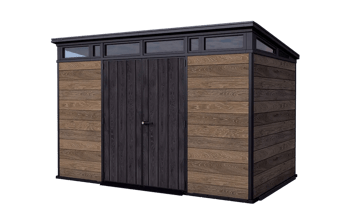





We build in a sustainable manner.
We use innovative technologies and sustainable materials to build planet-friendly products that last a lifetime.